
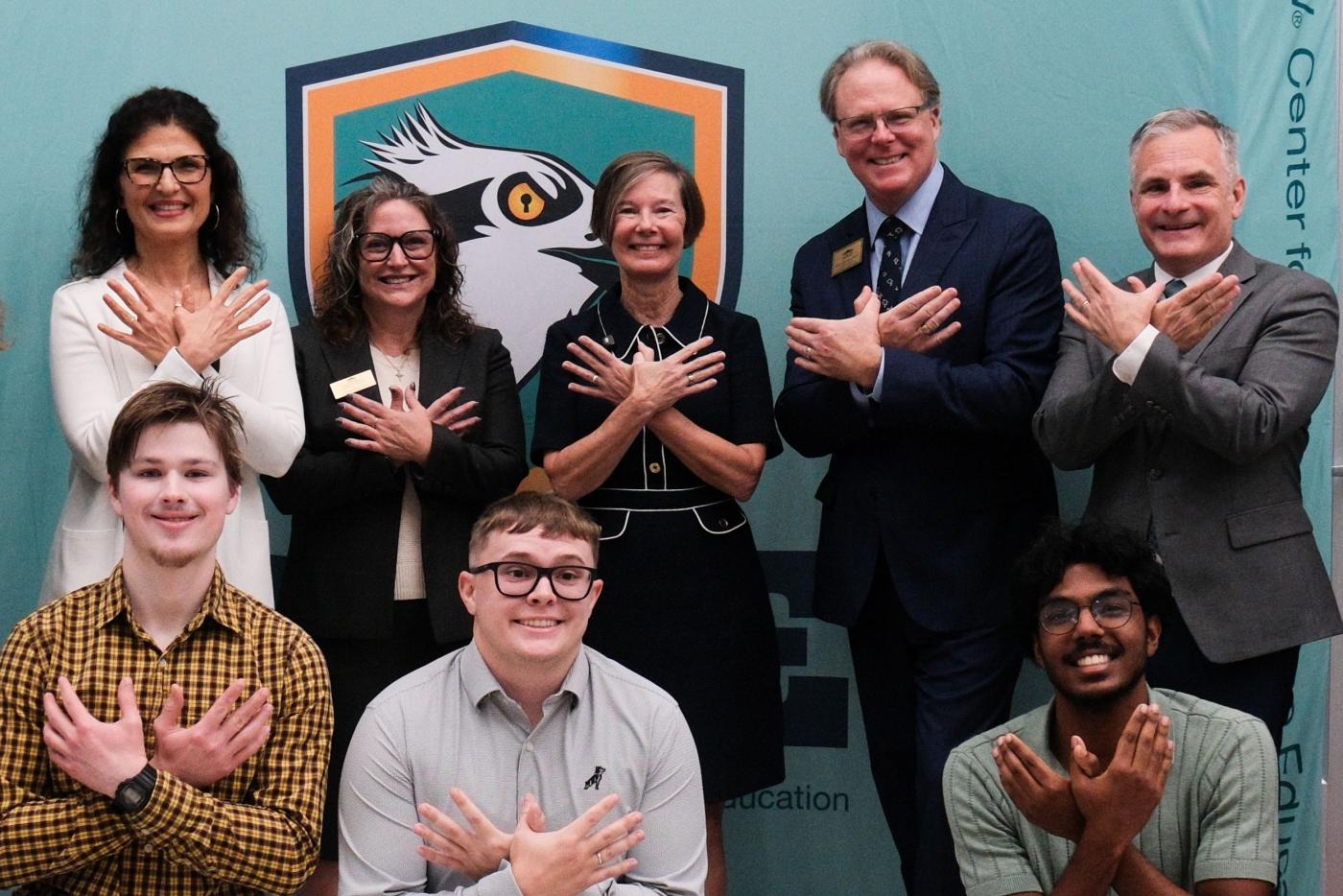
Today, Lieutenant Governor Rachel Hunt announced the Jobs of the Future initiative, a new piece of the Future-Ready North Carolina plan, at the University of North Carolina Wilmington’s Center for Cyber Defense Education (CCDE).
Through Jobs of the Future, Lt. Governor Hunt will highlight workforce development programs across the state that are helping North Carolina’s strongest industries evolve.
“North Carolina has always been at its best when we prepare our people for what’s next,” said Lt. Governor Hunt. “That means building the workforce we need for growing fields like cybersecurity while continuing to innovate in the industries that have long been strengths for our state.”
Preparing North Carolinians for careers in Cybersecurity is a key priority of the Jobs of the Future initiative. As more of our daily lives, businesses, and critical infrastructure rely on digital technology, the need for skilled cybersecurity professionals continues to grow. North Carolina must prepare its workforce to meet these challenges, protect our communities, and help our businesses stay secure.
Cybercrime costs North Carolinian’s real money every year. According to the FBI, North Carolina residents lost over $431 million to internet crimes in 2025, up from $324 million in 2024. The report says over $15 million of last year's losses were connected to artificial intelligence, further highlighting the need to bolster the state’s Cybersecurity workforce.
Through her service on the National Lieutenant Governors Association’s Aerospace and Defense Committee, Lt. Governor Hunt recognizes the importance of building a strong Cybersecurity workforce to support North Carolina’s economy and national security.
Jobs of the Future adds to Lieutenant Governor Hunt’s policy agenda, Future-Ready North Carolina, which also focuses on North Carolina’s workforce early through investments in child care and community colleges.
At UNCW, Lt. Governor Hunt toured Center for Cyber Defense Education (CCDE) and spoke with students and faculty about the importance of the Cybersecurity workforce pipeline.
"UNCW is ready to lead the state and nation in building a strong Cybersecurity workforce,” said Dr. Ulku Clark. “Our economy, our state, and our world are changing rapidly, and that means there’s a host of new threats on the horizon. Our ports, like the one here in Wilmington, generate around $16 billion in economic output every year. Through CCDE, we’re training students to protect the flow of commerce here and across the country.”
The CCDE was launched in April 2018 and has grown into UNCW's hub for cybersecurity education, research, and outreach, led throughout by Dr. Ulku Clark. It is jointly anchored in the Cameron School of Business and the College of Science and Engineering. The B.S. in Cybersecurity, launched in fall 2022, is the first cybersecurity undergraduate major in the UNC System.
CCDE also houses The Maritime Cybersecurity Applied Research, Technology, and Education Center (MCARTEC). MCARTEC aims to secure and strengthen the resilience of the maritime subsector, a complex system responsible for the safe and secure transport of 95% of the cargo entering the United States, which accounts for approximately 25% of the nation’s GDP.
Governor Josh Stein has proclaimed October Cybersecurity Awareness Month in North Carolina to encourage all North Carolinians to prioritize online safety and protect themselves from online threats and scams.
Read more about the Future-Ready North Carolina plan here.
Read Governor Stein’s Cybersecurity month proclamation here.